



Pothole repairs are a necessary evil, but they don’t need to be slow, disruptive, or wasteful. Traditional methods like hot mix asphalt and spray injection do the job, but they’re resource-heavy, time-consuming, and often short-lived. From excavation and compaction to road closures and repeat visits, it all adds up.
When you use Expert Pothole Repair Services from 2 Rent, combining Elastomac with trained crews and the right equipment for permanent, efficient fixes.
That’s where Elastomac comes in.
This pour-in-place material offers a cleaner, faster, and longer-lasting alternative – cutting downtime, reducing waste, and locking water out for good, especially when used alongside specialist road repair equipment from 2 Rent for milling, preparation, and safe traffic management.
In this guide, we’ll look at how Elastomac streamlines the entire road repair process, saving you both time and money.
Key Takeaways
- How are potholes repaired?
- What are the cons of traditional pothole repairs?
- What is Elastomac?
- Why use Elastomac for pothole repairs?
- How much does a pothole cost to repair?
- What are the best products for fixing potholes?
- Who should be using Elastomac?
- Streamline road repairs with 2 Rent
How are potholes repaired?
Potholes are usually repaired using one of three main methods: cold patching, hot mix asphalt (HMA), or spray injection patching.
- Cold patching is a temporary fix where pre-mixed asphalt is poured into the pothole and compacted. It’s fast, but not long-lasting.
- Hot mix asphalt repair involves cutting out the damaged area, excavating it, applying a tack coat, and then filling it with hot asphalt. This method is more durable but time-consuming and resource-heavy.
- Spray injection patching uses a combination of compressed air and bitumen to fill the hole, but still requires drying time and traffic control.
Each of these methods involves saw-cutting, material excavation, and compaction, often leading to high costs, waste, and extended road closures, so pairing Elastomac repairs with Road Sweeper Hire helps keep work areas clean and safe while minimising disruption.
Elastomac offers a completely different approach. It skips excavation altogether. Instead, this flowable material is poured directly into the pothole or crack, bonding to the existing surface without the need for saw cuts or compaction. The result is a faster, cleaner repair that’s ready in a fraction of the time – and lasts much longer.
What are the cons of traditional pothole repairs?
Conventional pothole repairs might get the job done, but they come with a lot of downsides:
- Up to 12,000 kg of material is excavated for every 100 sq. metres of repair.
- Time on a 100 sq. metre site is around 18 hours – dragging out road closures and labour costs.
- Carbon footprint is high – around 2,600 kg of CO₂e per 100 square metres.
- Water ingress remains a problem – once water gets in, the road fails again.
What is Elastomac?
Elastomac is a new kind of repair material that skips the digging and waste. It’s a flexible material that’s poured straight into cracks, potholes, and surface defects, bonding to the existing road surface and locking out water.
What makes it different? It’s made from recycled end-of-life tyres – 9 tyres per tonne – and contains no fossil fuel-based bitumen. That means it’s not just easier to use, it’s also far better for the environment.
Why use Elastomac for pothole repairs?
Elastomac is becoming one of the most popular road repair solutions. Here are a few reasons why:
- No excavation – pour it in and you’re done
- Zero waste – no need to dig up and dump material
- Fast cure time – roads can reopen quickly
- Durable bond – keeps water out, reduces repeat repairs
- Eco-friendly – cuts carbon footprint by 85%
It works on both asphalt and concrete and can handle all kinds of surface issues, including potholes, cracks, joints, rutting, fretting, and wheel tracking.
How much does a pothole cost to repair?
The cost of fixing a pothole depends on how it’s done. A conventional repair can cost hundreds of pounds once you factor in excavation, material, labour, equipment, traffic control, and disposal.
With Elastomac, you’re cutting costs across the board:
- Less labour – one crew, one visit
- Less material – only 2,000 kg needed vs 12,000 kg per 100 sq. m
- Less downtime – just 3 hours on site instead of 18 per 100 sq. m
Over time, those savings add up, especially if you’re managing a large road network.
Did you know? At 2 Rent, we offer the full end-to-end service. From road repair supplies, like Elastomac, to a fully trained team and traffic management – we have all your needs covered. Get in touch for a free quote today.
What are the best products for fixing potholes?
There are plenty of patching materials on the market, but most still rely on traditional hot-lay asphalt and excavation. Elastomac eliminates the need for all that. It’s simple, clean, and quick to use.
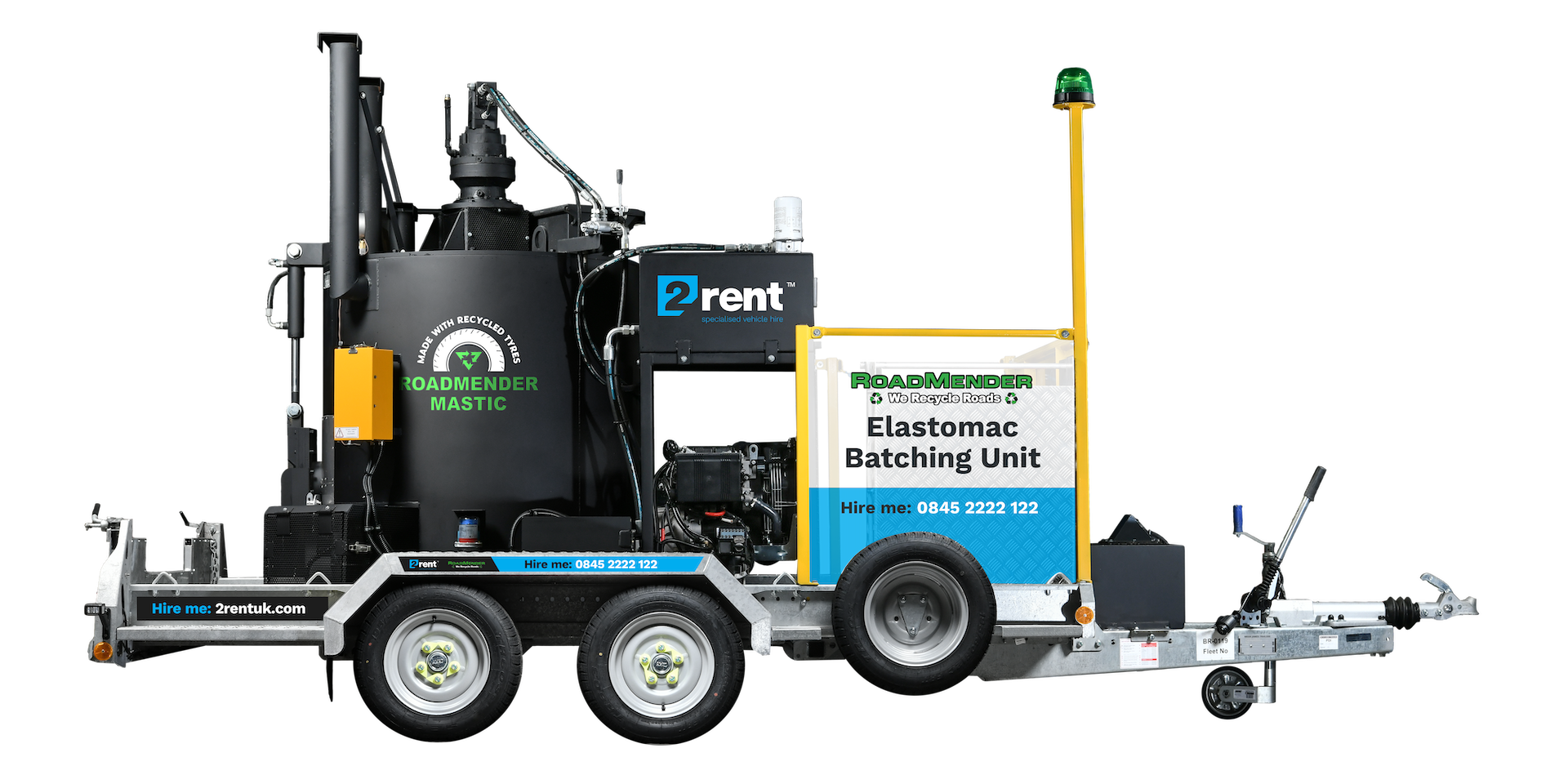
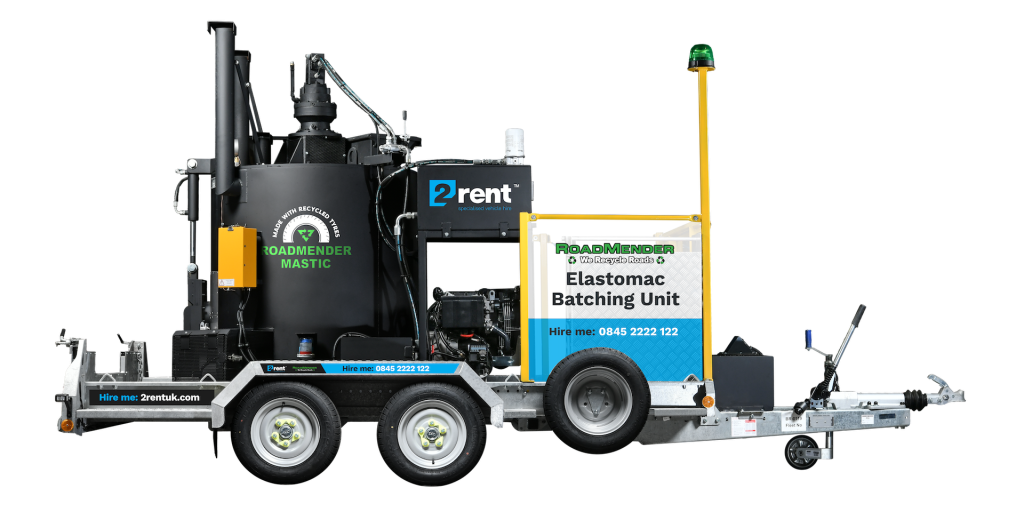
If you’re looking to streamline the process even further, Elastomac pairs with towable batching units that mix the material on site. That means you can make what you need when you need it – no hotboxes, no wasted stock.
Who should be using Elastomac?
If you’re responsible for roads, pavements, or car parks – whether you’re a council, contractor, or utility company – Elastomac should be on your radar. It’s built for anyone who wants to:
- Reduce carbon impact
- Cut down time on site
- Lower material and labour costs
- Avoid disruptive road closures
- Get longer-lasting results
Streamline road repairs with 2 Rent
Traditional pothole repairs are slow, messy, and expensive – and they haven’t changed much in years. You’re cutting out huge chunks of road, hauling away waste, burning through materials, and often having to go back and fix the same spot again.
Elastomac offers a better way. It cuts the carbon, skips the excavation, speeds up the job, and gets results that last. Whether you manage local roads, car parks, or infrastructure projects, it’s a smarter solution that saves time, money, and hassle.
Ready to modernise your road repair process? See the equipment or get in touch to talk through how Elastomac could work for your next project.
Latest News

How much does cherry picker hire cost in the UK? (2026 price guide)
Read more
Daily vs weekly cherry picker hire: Which is better?
Read more
5 ways traffic management vehicles improve site efficiency
Read more
10 reasons businesses choose road sweeper hire for their projects
Read more
GNSS meets 3D scanner: A look inside the viDoc®
Read more
How to repair potholes: Streamlining fixes with Elastomac
Read more
The top 5 applications for Ground Penetrating Radar (GPR)
Read more
What is a Ground Penetrating Radar (GPR)?
Read more
Self-drive vs. operated cherry picker hire: Which one is right for you?
Read more
How crane truck hire can save you time and money on your next project
Read more