



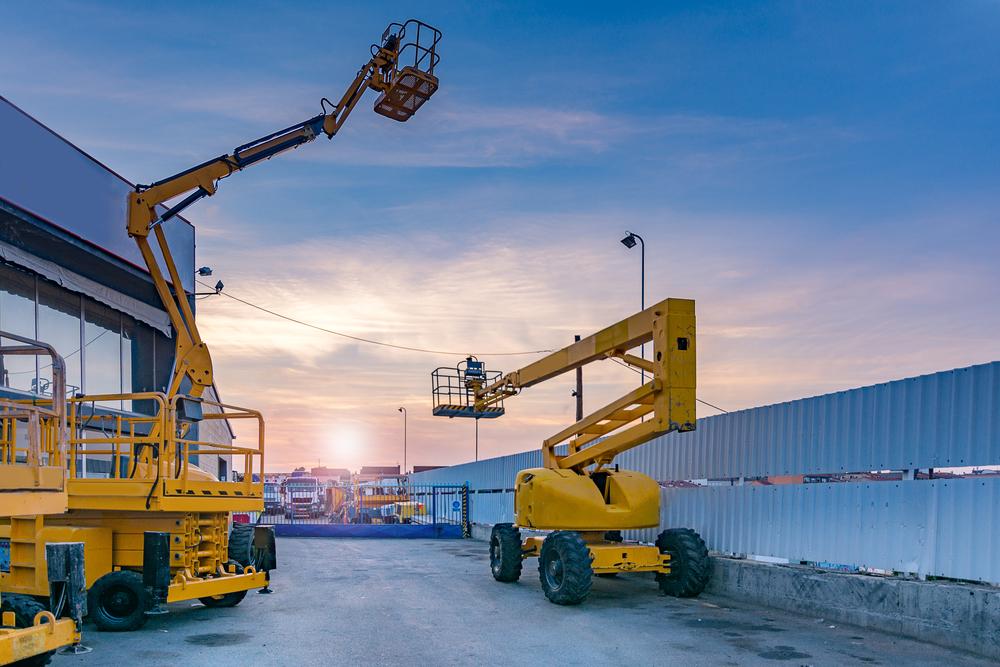
If you’re working at height, you can’t just guess what size cherry picker you need.
Choose one too small and the job stalls. Choose one too big, and you’re paying for capacity you don’t need. Either way, it costs you. And on construction sites, highway works, or utility repairs, problems can quickly escalate.
So, what height cherry picker do you actually need?
The answer comes down to a few things: working height, platform height, outreach, site access, and the type of job you’re carrying out. Once you understand these factors, choosing the right boom lift or aerial work platform becomes much simpler.
In this guide, we’ll break down exactly how to choose the right cherry picker height, explain the difference between working height and platform height, and show you which machines are typically used for construction, highways, utilities, and depot maintenance work.
Jump to:
- What is a cherry picker?
- Working height vs platform height explained
- What are the most common cherry picker heights?
- How do I know which cherry picker height I need?
- What are the different types of cherry pickers?
- How do you calculate the cherry picker height you need?
- What height cherry picker is best for your job?
- How to choose a cherry picker height safely
- How do cherry pickers compare to other powered access machines?
- What affects the price of cherry picker hire?
What is a cherry picker?
A cherry picker is a type of aerial work platform (AWP) designed to lift workers safely off the ground, so they can work at height.
You might also know them as:
- Boom lifts
- Mobile elevated work platforms (MEWPs)
- Powered access equipment
Cherry pickers use a hydraulic arm, known as a boom, to raise a basket or platform where the operator stands. From there, workers can safely reach high or awkward areas without needing ladders or scaffolding. They’re often used for jobs like:
- Roofing repairs
- Tree works
- Window cleaning
- Building maintenance
- Electrical installations
- Sign installation
- Construction work
- Warehouse maintenance
The main advantage of a boom lift is its flexibility. Instead of building scaffolding or repositioning ladders constantly, you can move the machine and reach the exact spot you need.
Working height vs platform height explained
Before choosing a cherry picker, you need to understand the difference between working height and platform height.
These two terms are used across all MEWP hire and boom lift specifications, and knowing the difference will help you choose the right machine.
What is a cherry picker’s platform height?
A cherry picker’s platform height is the height of the basket floor above the ground. For example, if a cherry picker has a 12 metre platform height, the base of the basket rises 12 metres.
What is a cherry picker’s working height?
A cherry picker’s working height refers to the highest point an operator can reach while standing in the basket – usually around 2m above their head. That means the working height is usually around 2 metres higher than the platform height.
| Platform height | Working height |
| 10m | ~12m |
| 15m | ~17m |
| 20m | ~22m |
When deciding what height you need from your cherry picker hire, focus on the working height. That’s the height your job actually requires.
What are the most common cherry picker heights?
Cherry pickers come in a wide range of sizes. Some compact powered access machines reach under 10 metres, while large telescopic boom lifts can reach over 50 metres. Here’s a rough guide to typical cherry picker heights and the jobs they’re best suited for.
10–12 metre cherry pickers
These smaller cherry pickers are compact, easy to manoeuvre, and ideal where space is limited. They’re usually used for indoor access work, such as:
- Warehouse maintenance
- Lighting installation
- Painting and decorating
- Electrical work
- Retail fit-outs
15–17 metre cherry pickers
This size cherry picker is commonly used for two-storey buildings and residential property maintenance projects, including:
- Roof repairs
- Gutter cleaning
- Tree trimming
- Exterior painting
- Sign installation
20–30 metre cherry pickers
These cherry pickers are designed for higher commercial work. They provide greater boom lift reach and working height, making them suitable for multi-storey buildings. You’ll often see them used for:
- Office building maintenance
- Window cleaning on taller buildings
- Industrial repairs
- Construction projects
- Large signage installation
40-metre+ cherry pickers
The largest cherry pickers are used for heavy-duty infrastructure and high-rise work. These machines provide serious aerial access height and outreach, allowing operators to reach difficult areas safely. They’re usually used for:
- High-rise construction
- Bridge maintenance
- Stadium work
- Large industrial facilities
How do I know which cherry picker height I need?
If you need to know the height of your cherry picker hire before booking, ask yourself the following questions to get a better idea:
How high up is the job?
The first thing to look at is the highest point you need to access. Measure (or double check with the project manager) the actual working area rather than just estimating from ground level – even a small miscalculation can leave you with the wrong machine on site.
And remember: always think in terms of working height, not platform height. Working height is the maximum height an operator can safely reach from the basket, while platform height is the height of the basket floor itself. In most cases, the working height is around 2 metres higher than the platform height.
Do you need to reach horizontally, as well as vertically?
Height is only part of the decision when choosing the right cherry picker hire. You also need to think about how far the machine needs to reach across, especially if the work area is not directly above where the machine can be positioned.
On many sites, obstacles can prevent you from placing the cherry picker exactly where you need it. You may need to reach over roof edges, trees, machinery, balconies, barriers, or other structures to access the job safely.
This is where horizontal outreach becomes important. Outreach refers to how far the boom can extend away from the base of the machine, and it can make a big difference when working in restricted or awkward spaces.
For example, a job might only need a small working height, but if there is a wide gap, obstruction, or limited access below, you may need a machine with greater sideways reach rather than extra vertical height.
Articulated boom lifts are often the best choice for this type of work because their jointed booms allow operators to bend up and over obstacles. This makes them particularly useful on sites where direct access is limited, and flexibility is just as important as height.
What obstacles and site access issues are you dealing with?
Before booking a cherry picker hire, take a closer look at the site conditions. The height and reach of the machine matter, but they are only useful if the equipment can actually get into position and operate safely once it arrives on site.
Start by thinking about access to the work area. Is there enough space for the machine to enter, turn, and set up properly? Some sites have narrow entrances, tight yards, restricted compounds, or limited room between buildings, which can rule out larger machines.
You also need to check for overhead obstacles such as cables, pipework, tree branches, canopies, or structural features that could affect how the boom is raised and positioned. Even when the machine has the right working height, these restrictions can make access more difficult than expected.
Ground conditions are just as important. Understand whether the surface is level, stable, and suitable for the type of machine you are hiring. Uneven ground, soft surfaces, slopes, or recently disturbed areas may mean you need a different type of powered access equipment or a machine designed for rougher terrain.
Is the job inside or outside?
The type of cherry picker you need will also depend on where the work is happening. Before arranging your cherry picker hire, think about whether the job is indoors or outdoors – as this will affect the best power type, machine size, and working capability.
For indoor jobs, electric cherry pickers are usually the best option. They are quieter to operate, produce no emissions, and are generally better suited to enclosed environments such as:
- Warehouses
- Factories
- Shopping centres
- Maintenance areas
Many indoor machines are also more compact, which makes them easier to manoeuvre in tighter spaces and around shelving, equipment, or internal structures.
For outdoor work, diesel boom lifts are often preferred because they work at greater heights and perform better on rougher ground. This makes them best for construction sites, highway work, utility maintenance, and external building repairs where you need more power and reach.
What weight capacity will you need?
Every cherry picker has a safe working load, and choosing the right capacity is just as important as choosing the right height.
In most cases, cherry pickers allow around 200–250kg in the basket, which is usually enough for one or two workers along with their tools and equipment. However, this can vary depending on the type of machine, the platform size, and how the boom is being used.
It’s worth thinking about the full load, not just the number of people using the platform. Tools, materials, testing equipment, and any additional gear all add to the total weight, and exceeding the machine’s limit can affect both safety and performance.
Need help choosing the right cherry picker? Get a free quote from 2 Rent and let our team match you with the right machine for the job.
What are the different types of cherry pickers?
The different types of cherry pickers range from telescopic boom lifts to vertical mast lifts. Each type of cherry picker has its own unique uses and advantages – let’s take a closer look at each to understand them better.
Telescopic boom lifts offer great vertical reach
Telescopic boom lifts have a straight arm that extends directly outward and upward, making them ideal when you need direct access to the work area with as much height and horizontal reach as possible.
They are designed to provide:
- Maximum working height
- Long horizontal outreach
- Strong lifting performance
Because the boom extends in a straight line, telescopic boom lifts are often best suited to open areas with fewer obstacles between the machine and the job. This makes them a popular choice on construction sites, industrial facilities, and infrastructure projects where operators need to reach high elevations quickly and efficiently. These include:
- Steelwork
- Cladding
- Façade installation
- High-level maintenance
- Jobs where a long, direct reach is more important than the ability to manoeuvre around obstructions
Articulated boom lifts are best for flexibility
Articulated boom lifts have multiple joints in the arm, which lets their platforms bend, rise, and move around obstacles – rather than only extending upwards in a straight line.
This makes them especially useful when the work area is difficult to access directly. Instead of needing a clear path from the machine to the job, operators can position the boom to reach up and over barriers, roofs, structural features, and other obstructions.
Articulated boom lifts are the best choice for jobs like:
- Roof and gutter repairs
- Pipework, steelwork, and ducting
- Utilities maintenance
- Depot and warehouse maintenance
- Bridge and highway works
Vertical mast lifts for indoor work
Vertical mast lifts are compact powered access machines designed mainly for indoor work where space is limited, and the job is directly above the operator.
Unlike boom lifts, they move straight up rather than extending outward, which makes them work best when horizontal outreach isn’t needed. Their smaller size also allows them to work well in narrow aisles, tighter spots, and busy indoor environments where larger machines would be difficult to manoeuvre.
Vertical mast lifts are usually used for:
- Retail maintenance
- Warehouse work
- Electrical installation
- Lighting maintenance
- Stockroom and facilities repairs
How do you calculate the cherry picker height you need?
Calculating the cherry picker height you need is simple, and can be done in four easy steps:
Step 1: Measure the working height
Start by identifying the highest point you need to reach to complete the job safely. This is the working height, not the platform height shown in the specification.
Step 2: Add a safety margin
Allow an extra 1–2 metres of working height so the operator has enough room to work safely and comfortably.
Step 3: Convert to platform height
Once you know the working height, subtract around 2 metres to estimate the platform height.
For example:
- Required working height: 16m
- Platform height needed: ~14m
Step 4: Consider outreach
If the work area is not directly above the machine, you also need to think about horizontal reach. Check the machine’s outreach specification, or confirm with your plant hire supplier, to make sure it can safely reach the work area around any obstacles.
What height cherry picker is best for your job?
The best cherry picker height for your job depends on the type of work, the access required, and the site conditions. Below are the typical working height ranges used for construction, highways, utilities, and depot maintenance.
10–15m cherry pickers
At this height range, the most common uses are lower-level access work in depots, yards, railways, and logistics. Typical jobs include:
- Lighting repairs
- Roof maintenance
- CCTV installation
- Signage adjustments
Compact powered access equipment often works best here, as access routes and storage areas can be tight.
12–20m cherry pickers
Cherry pickers in this height range are most often used in construction site maintenance, installations, and survey work. They’re best suited for tasks like:
- Roof inspections
- Cladding installations
- Lighting work
- Structural maintenance
- Infrastructure inspections
This height range is typically suitable for two- to four-storey structures and a wide variety of live site tasks at lower heights.
15–25m cherry pickers
This is a common height range for highways and local authority work, where teams need safe access above traffic infrastructure for tasks such as:
- Installing signage
- Inspecting bridges
- Maintaining lighting
- Repairing overhead equipment
15m–30m cherry pickers
Cherry pickers in this height range are typically used for utilities maintenance and reactive repair work, including:
- Power lines
- Telecoms equipment
- Street lighting
- Other overhead assets
How to choose a cherry picker height safely
Choosing a cherry picker height safely means looking beyond the height of the job and checking the site conditions, operating environment, and machine limits.
- Ground conditions – Stability is a must, especially on construction sites, highways, and utility work areas where surfaces can be uneven or recently excavated. Taller cherry pickers place more load through the machine, so the ground must be suitable for it to be used safely.
- Wind conditions – The higher the platform height, the more wind becomes a factor. Strong winds can affect a cherry picker’s stability and the operator’s safety. Always check the machines’ limits and site conditions before operating a boom lift at height.
- Operator training and compliance – Most projects require trained operators to use MEWPs safely and legally. Many contractors rely on IPAF-certified operators, which shows the equipment is being used correctly and helps maintain site compliance.
- Safe working load – Every cherry picker hire has a maximum basket capacity, usually around 200–250kg. That needs to include the operator, tools, and any equipment being used during the job.
For site managers and maintenance teams, getting these details right helps avoid incidents, delays, and unnecessary downtime on active sites.
How do cherry pickers compare to other powered access machines?
A cherry picker isn’t always the best option for efficiently reaching height, but on many live sites, it’s the fastest and safest way to get to where you need to be. Here’s how cherry pickers compare with other powered access equipment solutions.
- Cherry picker vs scissor lift: A scissor lift moves vertically and is best for when you’re working directly above the machine, such as in warehouses or indoor maintenance work. A cherry picker or boom lift, on the other hand, offers both height and horizontal outreach, making it much better for reaching over obstacles like roofs, barriers, or roadside infrastructure.
- Cherry picker vs scaffolding: Scaffolding works well for long-term projects where access is needed over several days or weeks. But for reactive maintenance, inspections, and quick repairs, cherry pickers are far more efficient. You can position the machine quickly, complete the work, and move on without the time and labour involved in building scaffolding.
On highway works, utilities maintenance, and active construction sites, that flexibility can make a big difference to productivity.
What affects the price of cherry picker hire?
Cherry picker hire costs usually increase with machine size, but the total price also depends on delivery, running costs, and the demands of the job.
But choosing the wrong size can end up costing more in the long run. Larger cherry pickers typically cost more because they:
- Require larger transport vehicles for delivery
- Use more fuel and power
- Have higher maintenance and operating costs
For procurement and fleet coordinators, the goal is usually to match the machine to the job without over-specifying the equipment.
Hiring the correct boom lift working height helps you:
- Avoid paying for unnecessary capacity
- Keep hire costs under control across multiple sites
- Ensure crews have the access they need without delays
Hire your cherry picker from 2 Rent today
When you need the right cherry picker hire first time, 2 Rent helps you take the guesswork out of the decision. With expert advice, a wide range of powered access equipment, and experience supporting construction, highways, utilities, and depot maintenance, we’ll help you hire the right machine for the job without overspending or risking delays.
Request a free quote today and get the right access solution in place quickly, safely, and with confidence.
Latest News
What height cherry picker do I need?
Read more
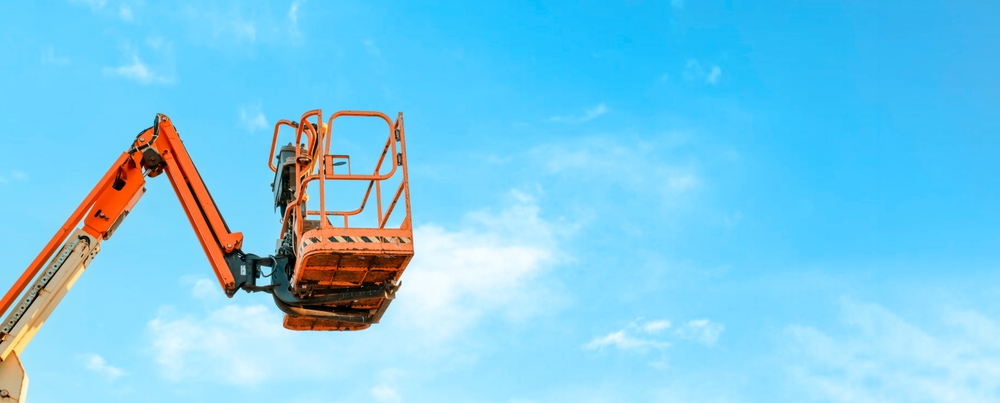
How much does cherry picker hire cost in the UK? (2026 price guide)
Read more
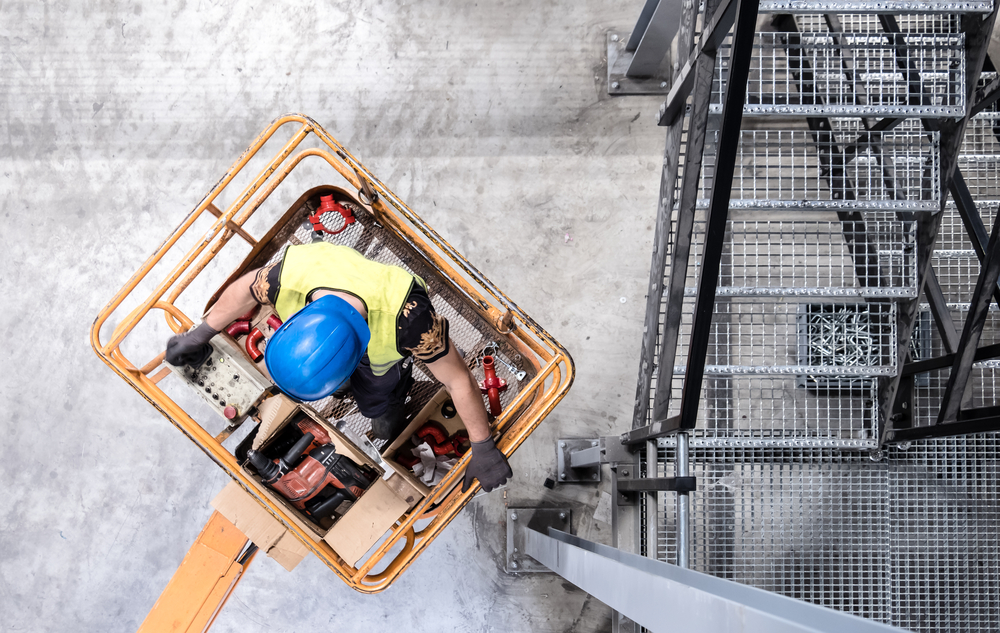
Daily vs weekly cherry picker hire: Which is better?
Read more
5 ways traffic management vehicles improve site efficiency
Read more
10 reasons businesses choose road sweeper hire for their projects
Read more
GNSS meets 3D scanner: A look inside the viDoc®
Read more
How to repair potholes: Streamlining fixes with Elastomac
Read more
The top 5 applications for Ground Penetrating Radar (GPR)
Read more
What is a Ground Penetrating Radar (GPR)?
Read more
Self-drive vs. operated cherry picker hire: Which one is right for you?
Read more