



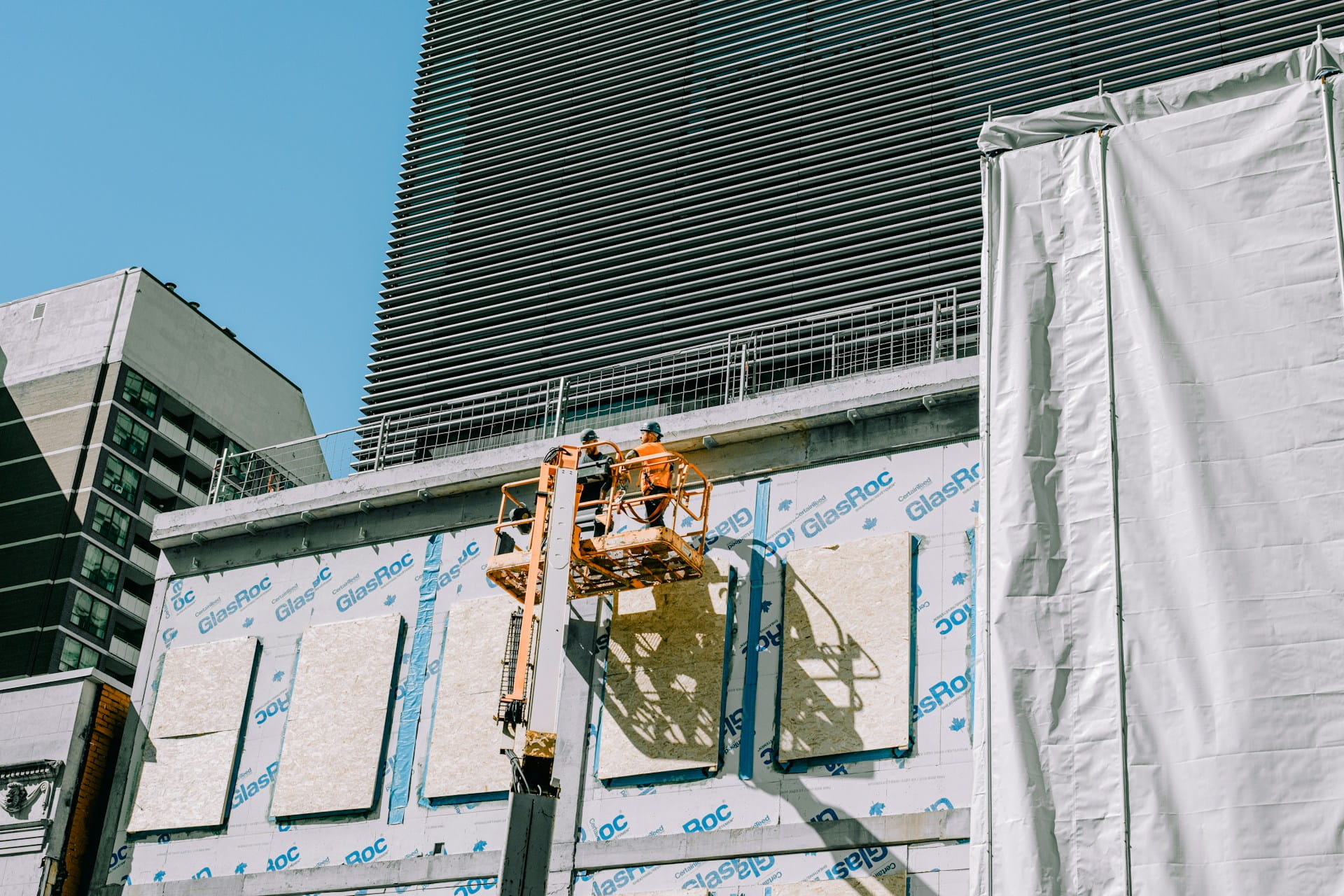
The two most common types of powered access equipment that help you work at height are the cherry picker and the scissor lift. Both are types of mobile elevating work platforms (MEWPs) that lift workers and equipment safely to hard-to-reach areas.
But they’re built for different tasks. Choose the wrong one, and you could run into problems like limited access, downtime, and compliance risks.
The biggest difference between a cherry picker and a scissor lift is how they move and the type of access they provide. In this guide, we’ll answer the question, “What’s the difference between a cherry picker and a scissor lift?” so you can make the best choice for your project.
What is a cherry picker?
A cherry picker is a type of powered access equipment that uses a hydraulic boom arm to safely lift someone inside a small platform or basket into position. The boom extends up and outwards, letting you work around obstacles or reach across gaps. Because of this movement, cherry picker reach is far greater than most other access platforms. For site managers and utilities teams working in restricted environments, this flexibility is often a must-have for the best possible access.
What are the different types of cherry pickers?
From telescopic boom lifts to truck-mounted cherry pickers, there are several types of cherry pickers used across construction and infrastructure work.
Telescopic boom lifts for direct access upwards
A telescopic boom lift has a straight extendable arm that reaches outward in a straight line. Because the arm extends directly, these machines provide maximum horizontal reach, which is best for open sites that require direct reach, such as:
- Bridge inspections
- Building maintenance sites
- High-level construction work
Articulating boom lifts for flexible access at height
An articulating boom lift works similarly to a telescopic boom lift, but includes multiple joints that let the boom bend around corners and over obstacles. This makes them especially useful for work sites with tighter access, such as:
- Building façades with obstructions below
- Industrial sites with pipework, machinery, or fixed structures
- Street works around signage, lighting columns, or barriers
- Maintenance work above roofs, canopies, or extensions
Truck-mounted cherry pickers for quick, portable use
A truck-mounted cherry picker is fitted directly onto a vehicle to help you move between multiple sites where height access is needed, set up quickly, complete the job, and move on without long delays or downtime.
As they allow for quick, reactive access at multiple locations, truck-mounted cherry pickers are often used by:
- Utilities companies
- Street lighting contractors
- Telecoms engineers
- Highway maintenance teams
- Tree and vegetation management crews
Because they’re vehicle-mounted, they can be deployed quickly across multiple locations, making them ideal for reactive maintenance.
Towable cherry pickers for compact access
Towable cherry pickers are compact access platforms that can be towed between work sites. They’re often used by smaller teams who need flexible height access without a larger truck-mounted machine. This includes:
- Property maintenance
- Sign installation
- Tree surgery and landscaping
- Facilities management
- Smaller-scale construction or repairs
What are the typical cherry picker heights?
Cherry pickers come in a wide range of working heights depending on the job, site access, and the type of reach needed. Common platform height ranges include:
- Around 12 to 16 metres for lower-level access work such as building maintenance, signage, inspections, and reactive repairs.
- Around 20 to 34 metres for more demanding access on construction sites, larger commercial buildings, and external maintenance jobs.
- Up to 70 metres for specialist infrastructure, utilities, and other high-level projects where maximum working height and outreach are needed.
At 2 Rent, we offer cherry picker hire across these height ranges, including tracked, articulated, and truck-mounted cherry pickers. That means we can help match the right platform height, outreach, and setup to the work you need to carry out. Get your free quote now.
What is a scissor lift?
A scissor lift is a vertical access platform designed to raise workers straight up from the ground. It uses a criss-cross metal support system, known as the scissor mechanism, which expands vertically under hydraulic pressure to lift the platform into position.
As the scissor arms extend, the platform rises directly upwards while keeping a stable base underneath. This creates a large, secure working area for tasks carried out above a fixed point.
Unlike a boom lift, a scissor lift does not extend outward. That means it needs to be positioned directly below the work area, making it best suited to jobs where straight vertical access is needed rather than outreach around obstacles.
What are the different types of scissor lifts?
There are a few types of scissor lifts, each with different fuel types and best suited to different work environments:
Electric scissor lifts for indoor use
Electric scissor lifts are used for indoor work where clean, quiet upward access is needed. Because they run with no emissions and low operating noise, they’re often used indoors where diesel-powered scissor lifts wouldn’t work.
They’re ideal for:
- Warehouses
- Retail spaces
- Distribution centres
- Depot maintenance
Diesel scissor lifts for outdoor use
Diesel scissor lifts are better for outdoor work where more power and better ground performance are needed. They’re often used on sites with uneven surfaces and tougher conditions than an indoor electric model would suit.
These lifts are often used on:
- Construction sites
- Infrastructure projects
- Industrial yards
Diesel scissor lifts are well suited to jobs such as cladding installation, steelwork, roofing, façade works, inspections, and general high-level construction tasks. Their larger platform space also makes them a good option where operators need to work with tools, materials, or another team member at height.
Rough terrain scissor lifts
Unlike a standard outdoor diesel scissor lift, which may be suitable for firmer ground and general external work, a rough terrain scissor lift is better suited to sites where poor ground conditions are part of the job. That makes it a better fit for muddy, sloped, or less predictable surfaces where extra grip, clearance, and stability matter.
They typically include four-wheel drive, larger tyres, and better stabilisation. They’re often used on:
- Early-stage construction sites
- Civil engineering projects
- Infrastructure works
- External installation jobs on unfinished ground
How do cherry pickers and scissor lifts compare?
Here is a quick comparison table highlighting the main differences between cherry pickers and scissor lifts.
| Feature | Cherry picker | Scissor lift |
|---|---|---|
| Movement | Up and out | Straight up only |
| Reach | Good for height and outreach | Good for vertical access only |
| Platform | Smaller basket | Larger platform |
| Capacity | Usually carries fewer people and less equipment | Usually carries more people, tools, and materials |
| Best for | Access over obstacles or hard-to-reach areas | Jobs directly above the machine |
| Typical use | External repairs, inspections, tree work, signage | Indoor maintenance, fit-outs, warehouse work |
Need help choosing the right access equipment? Get a free quote from 2 Rent and find the best fit for your site, height, and working conditions.
How to choose between a cherry picker and a scissor lift
If you are comparing a cherry picker and a scissor lift, the right choice usually comes down to access, working space, site conditions, and hire cost. While both are used for working at height, they do different jobs well.
Which is better for reach and awkward access?
A cherry picker is usually better when the work area cannot be reached from directly below. It can lift workers up and out, which makes it useful for reaching over obstacles, working around barriers, or accessing rooftops and elevated structures.
This makes cherry pickers a strong fit for:
- Highways work
- Utilities maintenance
- Telecoms installation
- Jobs where parked vehicles, traffic management, or site layouts block direct access
A scissor lift only moves straight up and down. That means it needs to sit directly beneath the work area. Where access is clear, this is often simpler and quicker.
Which gives you more working space at height?
Scissor lifts usually give you more room to work. Their larger platform can often carry multiple workers, along with tools, materials, and equipment needed for longer tasks. That makes them best for jobs where teams need space to work side by side, such as fit-outs, warehouse maintenance, and installation work.
Cherry pickers usually have a smaller basket designed for one or two workers with basic tools. That smaller basket helps keep the machine lighter and easier to position, which is useful on jobs where access matters more than platform space.
Which is better for longer tasks at height?
For longer tasks done above one fixed point, a scissor lift is often the better choice. Its wide base, guardrails, and stable platform make it good for work that takes time and needs workers to stay at height for longer periods.
Cherry pickers are often better for shorter, more targeted tasks where the machine needs to be repositioned or where the work is spread across different points. They can save time when direct access is not possible, but they are not usually the best fit for jobs that need a large working platform for long periods.
Which is better for live sites or restricted areas?
Cherry pickers are often better suited to live sites or awkward working areas. On highways, roadside jobs, utilities projects, and busy construction sites, the ability to reach over or around obstacles can keep work moving where space is limited.
Scissor lifts are often a better fit for more controlled environments. In warehouses, depots, factories, and indoor installation settings, where the machine can be placed directly below the work area, they can offer a simpler and more efficient access solution.
Which is more cost-effective to hire?
Scissor lifts are often the lower-cost option for straightforward vertical access. They are generally simpler machines and are usually cheaper to hire for jobs where outreach is not needed.
Cherry pickers usually cost more because they offer greater reach and more complex movement. Even so, they can still work out better value when site access is difficult, as they may reduce labour time and help avoid delays.
The cheapest option is not always the one with the lowest hire rate. It is the one that best suits the way the job needs to be carried out.
What training and safety checks are needed?
Both cherry pickers and scissor lifts require trained operators and proper site checks before use. In many cases, operators complete IPAF training so they can use powered access equipment safely and follow the right working procedures.
Before using either machine, site teams should check:
- Ground conditions
- Weather and wind exposure
- Overhead hazards
- Platform load limits
- Suitability of the machine for the work area
What are the pros and cons of cherry pickers?
The pros and cons of cherry pickers include:
Pros:
- Excellent reach
- Flexible positioning
- Ideal for restricted-access areas
- Suitable for outdoor infrastructure work
Cons:
- Smaller platform
- Higher hire cost
- More complex operation
What are the pros and cons of scissor lifts?
The pros and cons of scissor lifts include:
Pros:
- Large working platform
- High load capacity
- Very stable
- Cost-effective access solution
Cons:
- Vertical movement only
- Limited reach
- Must be positioned directly beneath the work area
Reliable powered access hire from 2 Rent
Choosing between cherry picker hire and scissor lift hire starts with understanding the job properly. From site access and working height to reach, platform space, and hire costs, the right choice depends on how and where the work needs to be carried out.
At 2 Rent, we help you take the guesswork out of that decision with expert advice, flexible hire options, and a wide range of powered access equipment to suit construction, maintenance, infrastructure, and industrial projects across the UK. Request a free quote today and get the right access equipment for your job in place quickly, safely, and with confidence.
Cherry picker vs scissor lift FAQs
What is the main difference between a cherry picker and a scissor lift?
The main difference between a cherry picker and a scissor lift is how they reach the work area. A scissor lift only moves straight up and down, while a cherry picker can lift upward and extend outward using a boom arm. That makes scissor lifts better for work directly overhead, while cherry pickers are better for jobs that need outreach around obstacles.
Which is safer: a cherry picker or a scissor lift?
Neither is automatically safer than the other when used properly. Scissor lifts are often seen as more stable because they lift vertically from a wide base, while cherry pickers are better suited to jobs where outward reach is needed. In both cases, safe use depends on the right machine, proper setup, trained operators, and following site rules.
When should you use a cherry picker?
You should use a cherry picker when the work area cannot be reached from directly below. They are commonly used for accessing rooftops, working over barriers, and reaching awkward or restricted areas on construction, highways, utilities, and maintenance jobs. They are especially useful when flexibility and outreach matter more than platform size.
Can a scissor lift replace a cherry picker?
No, a scissor lift cannot fully replace a cherry picker. A scissor lift only provides vertical access, so it cannot reach over obstacles or extend outward to awkward areas. It can do the same job only when the machine can be positioned directly underneath the work area.
Are cherry pickers more expensive than scissor lifts?
Yes, cherry pickers are usually more expensive to hire than scissor lifts. That is because they have more complex movement, greater reach, and often higher transport or setup costs. Even so, they can still offer better value on sites where difficult access would otherwise slow the job down.